Author: Maya Lopez (Blog Chief Editor)
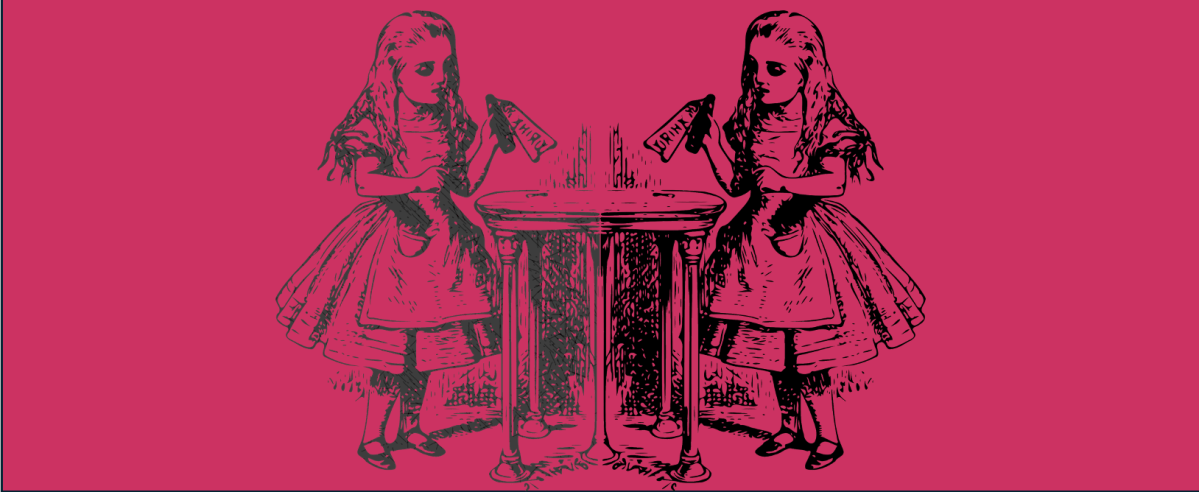
One way to describe pseudoscience is perhaps a distorted science. In some way or another, they present features that feel scientific, even to an exaggerated level. However, as the mirror separates the un-melding reality and its reflection, such distinction can be made between science and its reflection – pseudoscience. Today we will explore such philosophical grounds to prevent pseudoscience from infiltrating reality in this post-truth day and age. To this end, we will look into the original philosophical definitions and key takeaways I got from a special lecture – our first official event of this academic year – by Prof. Hasok Chang. He has also been supporting us as Senior Treasurer from the inception of our society. The lecture posed a deceivingly simple but surprising philosophical question: What is Pseudoscience? And the clue to this question lies about 100 years ago, on May 29, 1919.
Arthur Eddington, the director of Cambridge Observatory led an expedition to observe the solar eclipse to test the theory of relativity. Eddington and Dyson positioned themselves at Principe Island, while another expedition team with Crommelin and Davidson was in Brazil. Together they were challenging Einstein’s Theory of Relativity. If it was correct and the light is indeed bent by gravity, stars in the Taurus constellation would be visible during the eclipse, positioned differently compared to the calculations by Newtonian physics. Together, they made the observation that marks history: stars aligned with Einstein’s theory.
However, this was not the only history that was being made on this day. This story influenced a young 17-year-old in Vienna, and to quote himself “(it) had a lasting influence on my intellectual development.” Karl Propper would eventually become the philosopher who explored the philosophical distinction between knowledge based on science and what he coined as pseudoscience.
But first, what is science?
To unravel the question of pseudoscience, we first had to test our own perception of science itself. This may seem straightforward, based on what we learned about the scientific method in middle school. But what is science, really? More specifically in Popper’s words:
When should a theory be ranked as scientific?”
Surprisingly, this was a question that modern philosophers had never fully characterized up until Popper. While characterizing vast and wide “science” itself may be difficult, we can find the constituents of things we deem scientific.
So let’s lay some on the table. Many aspects of what we often perceive as scientific might be a little something like: quantitative, explanatory, and empirical. However, all these aspects are in fact well conserved in other domains that we also could define as – in Popper’s terms – pseudoscience (or at least non-hard/natural science). For example, consider the “social science” domain like Economics. Modern Economics also uses models that can be expressed in equations, presenting itself as more heavily mathematical than perhaps some of the medical sciences. Now let’s consider the next aspect on the list: explanatory. Conspiracy theories are no match in terms of explaining things – the icebergs can get so deep and it’s bulletproofed against all counterarguments, because see? Interpret it this way and it’s just another proof that absolutely everything ties back to the Deep State! But then, at least hard science is the most empirical approach to knowledge… right?
Objective and empirical data gathered from replicable experiments… but words like “objective” and “replicable” are not as clear-cut as one may hope. After all, to those who believe in pseudoscientific theories such as Flat Earthers, their experiences are indeed genuine replicable “experiments” that can be tallied and quantified objectively. So, these typical “qualities of science” like empirical-ness are unfortunately a matter of perspective and not a uniquely defining factor. To further complicate the matter, such a struggle for replicability is also in the world of actual sciences. Major natural science publications have been noting the “replicability crisis” for years, and it is important to acknowledge that even with a genuine intention of scientific experiment, small differences in interpretation and methods can pave the way to this replicability crisis.
…So by now, if you are feeling more confused about what science than before we started, fret not because this is very confusing. According to Prof. Chang, many undergrads facing this question in the HPS course will very often fall into the same pitfalls of presumed scientific qualities as those listed earlier. When pseudoscience at its core seems to mirror – and sometimes “outperforms” in – so many key qualities of science, and when in fact some cases of “pseudoscientific” theories turned out to be the basis of the next science and vice versa, you can’t help but wonder: Is there no way to identify science from the pseudoscience? While it is indeed not a clear-cut line to separate the two, luckily there is a philosophical distinction to be made.
Falsifiability and Popper’s observation on “predicting” the present vs. predicting the future
Back to Popper in Vienna, the early 1900s was an unprecedented epoch in the field of knowledge. A new realm of physics was being proposed by Einstein. Historical Materialism was proposed by Karl Marx as a new view on history, and the relationship of observed human behavior as a phenomenon is now seemingly explainable by Sigmund Freud’s Psycho-analysis. At the time, these frontiers of knowledge were arguably treated with equal weight as new theories that pushed the boundaries of the scientific mainstream. However, Popper concluded that not all “scientific achievement” was made equally depending on whether the method of obtaining the knowledge was to confirm an existing belief OR to actively attempt to disprove the unreality of the null hypotheses.
Let’s unpack that concept following the footsteps of Popper himself. Popper used to take the lectures by Einstein and was studying the psychoanalytic of Freud. One day, he asked Alfred Adler himself (an ex-colleague of Freud who eventually formed his own theory of individual psychology) about a case report that was seemingly not… Adlerian. Yet when asked, Adler easily explained the case using his theory, leaving no discrepancy. Given that Adler has never analyzed the individual of the case, Popper asked why he could be so sure to which Adler replied that his thousands of former experiences support this theory.
And this, was ultimately what distinguished Einstein’s theory to be the only truly scientific theory amongst the list earlier. Adlerian theory in this case was used to “predict” why the behavior had/has been taking place and it is so hard to “disprove” a retrospective interpretation. Similar criticism can also be applied to (in?)famous Freudian psychology. While still regarded as the foundations of modern psychology, it hasn’t aged too well when it comes to how “scientific” his theories are where every feminine intimacy issue is seemingly rooted in male genitalia envy and daddy issues. They explain why certain psychological phenomena happened so well by encapsulating them into logically constructed theoretical frameworks (although even then, it did cause disagreements, leading colleagues like Adler and Jung to depart). While such Freudian theories gave us the satisfaction of feeling like we understand why things are – this is still a retrospective explanation of a past – an explanation behind the known result. They didn’t, however, do as well when it comes to predicting unseen future behaviors – which often scientific hypothesis aims to do. This importance of how you verify scientific claims is perhaps akin to association and causation in modern medical science. Even if substance X is correlated with say cancer, you can only scientifically show that it causes cancer if you set up an experiment where you put that substance – in say mice or cell culture – to test your prediction on “unseen future” by seeing if it does form cancer or not. While you could always reinterpret past events (or interpret dreams in Freud’s case) to support your theory, if the cancer didn’t form or the stars didn’t align in 1919, the scientific theory is simply not working.
Furthermore, Popper brings in a new approach to this philosophical limitation of verificationism – falsificationism. In brief, Popper’s realization of the distinctively “scientific” approach to a theory by Einstein, led to philosophical conclusions that focus on how science actively disproves future possibilities to approach truth while pseudoscience (as in nature of the knowledge rather than modern conspiratory connotation per se) focuses on proving and explaining past phenomena. Following is the excerpt of his writing from 1962 outlining this concept in detail:
- It is easy to obtain confirmations, or verifications, for nearly every theory—if we look for confirmations.
- Confirmations should count only if they are the result of risky predictions; that is to say, if, unenlightened by the theory in question, we should have expected an event which was incompatible with the theory—an event which would have refuted the theory.
- Every ‘good’ scientific theory is a prohibition: it forbids certain things to happen. The more a theory forbids, the better it is
- A theory which is not refutable by any conceivable event is nonscientific. Irrefutability is not a virtue of a theory (as people often think) but a vice.
- Every genuine test of a theory is an attempt to falsify it, or to refute it. Testability is falsifiability; but there are degrees of testabilty: some theories are more testable, more exposed to refutation, than others; they take, as it were, greater risks.
- Confirming evidence should not count except when it is the result of a genuine test of the theory; and this means that it can be presented as a serious but unsuccessful attempt to falsify the theory. …
- Some genuinely testable theories, when found to be false, are still upheld by their admirers—for example by introducing ad hoc some auxiliary assumption, or by re-interpreting the theory ad hoc in such a way that it escapes refutation. Such a procedure is always possible, but it rescues the theory from refutation only at the price of destroying, or at least lowering, its scientific status. (I later [after 1920 –NS] described such a rescuing operation as a ‘conventionalist twist’ or a ‘conventionalist stratagem’.)
This was a revolutionary approach to thinking: only by interrogating your hypothesis by exploring other opposing possibilities, you can be confident about your theory. Furthermore, this lends to the idea that one day, when we do get an observation that contradicts our model, our standing theory will be then proven wrong. However, Popper believed that every falsified theory is “good” because we were able to rule out a possibility, putting us closer to the truth. This is perhaps the beauty and the complexity of the scientific method: it’s a long, iterative process of elimination, but we get closer to understanding the world, one step at a time.
Being comfortable with uncertainty
While now we have some philosophical grounds to determine which knowledge is more scientific than the other, this inevitably opened up another eerie reality: uncertainty. Scientifically, you can be confident that something is most likely a correct representation of the truth – but this is far from the solid explanatory fact -THE truth! – we all crave. After all, being confident about a theory still leaves room for the probability of exceptions. Science is inherently uncertain.
Nevertheless, the volatility of “truth”, is arguably the very appeal for aspiring scientists. You are off to an adventure of the unknown and you are using any tools to best encapsulate the mysterious nature lying in front of you. While this is a romanticized view from a reader of science myself, I can easily imagine that from anyone outside of the adventure crew, we can appear as a bumbling mess at times or worse, untrustworthy contradictorians and a hypocrite.
Many of the modern scientific achievements progressed through the process of falsification. This ultimately lends itself to denying at least part of the former discoveries, and thus individual reports across a timeline may appear contradictory. Even if this is inevitable and the reality is often more nuanced than the black-and-white “contradiction”, we must admit: flip-flopping on conclusion appears unprincipled and possibly dangerous for fields that directly affect life like medicine. Imagine if you asked a friend for advice. This person says one thing but then next month, does a complete 180 and even stack up evidence on why you were not supposed to do that. The explanation is certainly factual and logical, but the emotional appeal on whether you can trust this guy is put on a pedestal because it ultimately makes YOU responsible – requiring you to put in the work with a thinking cap.
In some circumstances, this might feel liberating. You are in charge of your thoughts based on a knowledgeable friend with references to back up different claims. But if you’re in your lows, or if you are in a desperate situation? This is too much – you might even find this friend irresponsible because you wanted advice to follow. In such a scenario, another friend – a more charismatic, authoritative figure who TELLS you specifically how to think with absolute certainty, and taking that red pill is all of a sudden more appealing.
So… is science doomed to lose the trust over pseudoscience?
Through the lecture, we explored further case studies of pseudoscience, attempts to change people’s minds, and personal experiences shared by Prof. Chang. But for today, I would like to round up with one of our key ongoing questions as CUSAP: What can science as a community do to be more trusted?
There is unfortunately no simple or singular answer (and yes, this is a cheat code academics use to jade the rest of the society, sorry). However, I think scientists themselves have a lot more we can do to change how society perceives science. I will even call it mandatory for scientists to care about this question and public communication of our work. Combatting the distrust should be the paramount importance to our profession, because we didn’t go through the painstaking process of all these degrees to be demarked as fraudsters, right? Are we not searching for truth to better understand the world? To better the world as we know it?
Partly, I declare this because I understand that it is not easy. Despite how Hollywood may portray “academic figures” like Nazi-fighting Indiana or tech-superman epitomized by Iron Man, science IS NOT THAT GLAMOROUS! Spending 4-6 hours (or more….) tending your cells (or counting god forbid), running around the field, and weekend lab time to feed your cultures – you may be surprised at how much “tedious” stuff takes place under the hood. Of course, for some, every moment of this work might be a pure joy – because they LOVE what they do -. But for many, like all jobs, there can be bits that we don’t particularly love.
But then what keeps us driving is the sheer belief that this search into reality will mean something. For medical researchers, this may be for our health. And how ironic is it if we are stuck in our ivory tower preaching our findings to better the society and no one trust what we say? Maybe it’s time to say goodbye to the genius scientist archetype or the heroic tech-bro myths, take off this facade of “logical (and thereby superior), non-emotional intellectuals”, and embrace our emotional drive. Because we care about facts AND emotion, for we love and care about the world of wonders – including everyone that inhabits it 🙂
If this kind of science philosophy is your spiel or you just want to learn some new cool misconceptions surrounding science (and trust me, just being a STEMM student does not make you immune to this!), consider joining us at the CUSAP mailing list or Instagram. Come say hi at one of the upcoming events if you can make it.
Sources and recommended reading:
- Popper’s Account of Scientific Theories (1962)
- Adam Smith Institute’s article “Einstein, and the importance of testing”
- Further article on Karl Popper with references
- A good summary video on the philosophy of falsificationism:
Discover more from Students Against Pseudoscience
Subscribe to get the latest posts sent to your email.
 Students Against Pseudoscience
4 thoughts on “CUSAP After Hours: Pseudoscience – the Science through the Looking Glass”