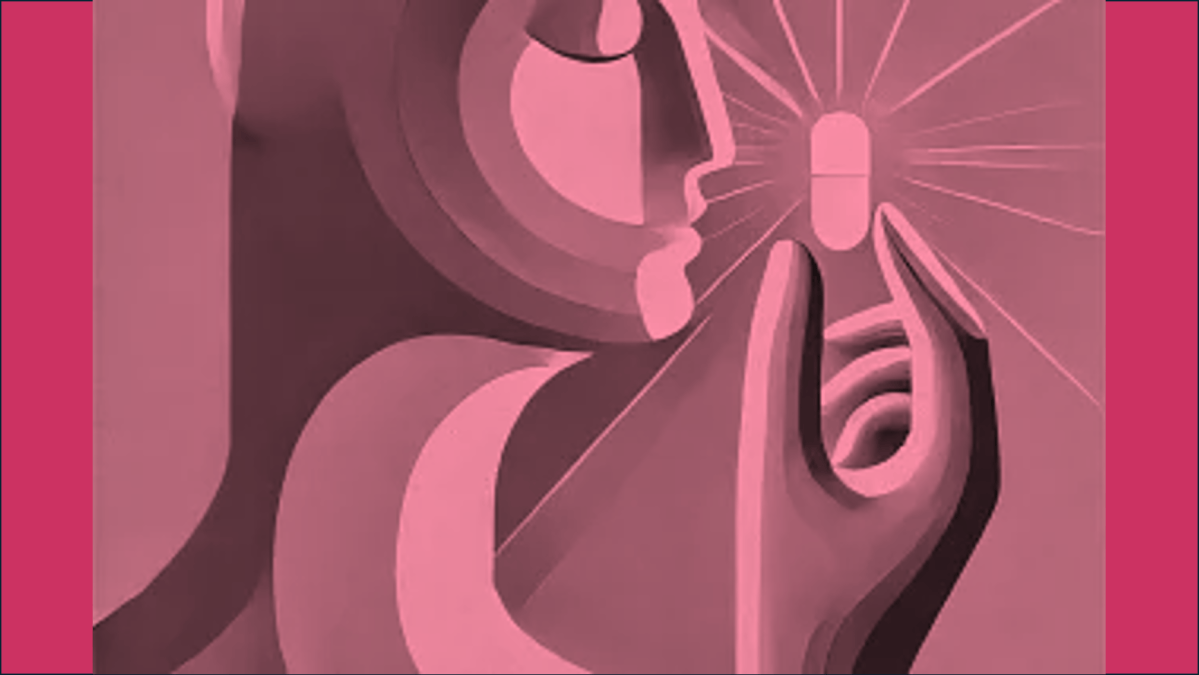
Paracetamol doesn’t get nearly enough credit as a wonder drug. While not as acutely lifesaving as penicillin, the quality of life improvement multiplied by the billions of people who use it means that paracetamol offers a pretty insane contribution to human wellbeing.
At any hint of a headache, I pop a couple pills, and am sorted out in 20 minutes. This saves me a day of pain, and the accompanying physiological stress – the blood pressure spikes, heart rate increases, and general bodily strain that prolonged pain can cause. It’s possible I go overboard with the paracetamol: before an exam, I usually take a few just in case a headache strikes. There’s probably a <1% chance of this happening, but given the huge stakes of remaining headache-free for the exam, I figure it’s worth it. I’ve also carefully optimised my coffee regimen, balancing the optimal buzz with avoiding bathroom breaks. So I arrive at every exam drugged up, ready to lock in. Maybe it’s just the placebo effect of feeling like I’m doping, but if it works it works.
This habit has been received extremely badly by friends and peers. Most people have a much higher threshold for taking paracetamol than me. They gasp at my willingness to take it for ‘minor’ discomfort, and if I suggest they do the same, I’m met with various justifications: toxicity, tolerance, making the headache worse. Or the classic ‘just drink water’, as if hydration and medication are mutually exclusive. Instead of resolving their discomfort quickly and safely, they’ll endure hours of decreased productivity or outright misery.
I think this is quite bizarre, and have always just assumed they were wrong and continued to sing paracetamol’s praises. But this is admittedly quite vibes-based of me, and as a good empiricist, I figured it was time to look into the data before I continue to assert that I’m right. Here’s what I found.
On paracetamol toxicity:
For patients without prior health risks or sensitivities, paracetamol causes few to no side effects at recommended doses. A paracetamol dose has a few slight immediate side effects. For example:
4 mmHg BP increase in already hypertensive patients. Ref
ALT (a liver enzyme) levels rise slightly, but this is comparable to the effect of exercise. Ref
Prolonged, daily use at maximum dosage *might* pose risks. Long-term use has been linked to possible increases in blood pressure and cardiovascular events, though findings are inconsistent. For example:
Using paracetamol for more than 22 days per month raised the relative risk of cardiovascular events by 1.35 in smokers but showed no increased risk in non-smokers. Ref
Some studies suggest a potential association with cancers like kidney and blood, but again, evidence is limited.
Medication overuse headache, or ‘rebound headache’, is a genuine risk for very frequent users. With time, regular overuse can lower your baseline pain threshold, leading to persistent, often severe headaches that don’t respond well to analgesics. It can be seriously disabling. But in the case of paracetamol and ibuprofen, MOH typically only develops after taking it on 15 or more days per month for months or years. Significantly higher than the occasional use I describe.
Paracetamol is safer than other painkillers. Ibuprofen, while still extremely safe, has higher risks of stomach irritation and other adverse effects. Ref
Overdosing is very dangerous. Paracetamol has a narrow therapeutic window, meaning the difference between an effective dose and a toxic one is small. Excessive intake can cause severe liver damage. Ref
Some other common myths:
“It interferes with your fever, which we’ve evolved for a reason.”
The data suggests paracetamol might only slightly prolong the duration of an illness (a few hours), if at all. Ref
“You’ll build a tolerance, and it won’t work anymore.”
I couldn’t find any studies at all that suggest paracetamol tolerance.
Paracetamol works via COX enzyme inhibition, not receptors like opioids or caffeine, so tolerance couldn’t develop by the same mechanisms anyway.
“Pain is natural, and good for you! It’s better to let your body build resilience.”
While much is said about the risks of taking paracetamol, few people talk about the cost of untreated pain.
Pain isn’t just unpleasant – it’s physiologically damaging. Ref It triggers the stress response, engaging the sympathetic nervous system and releasing adrenaline, which raises your heart rate and blood pressure. And it makes us miserable – mental state is a huge, and overlooked, predictor of human health.
In conclusion, paracetamol is incredibly safe when used correctly. Occasional, moderate use – like my once-a-fortnight headache relief – is nowhere near the thresholds associated with risk.
Purity culture
I think that the aversion to paracetamol is a symptom of modern purity culture. There’s a growing tendency to glorify ‘natural living’, and to believe that struggling through life without help from modernity is something we should strive for. I disagree – enduring pain unnecessarily doesn’t make you virtuous; it’s just bad for you.
There are plenty of other examples.
Reluctance to use epidurals during childbirth. And the rise of home births. Epidurals are safe; home births are not. But people have got it the wrong way round, because they assume natural = good.
Washing your hair less is good for it. I too was taken in by this as a teenager, enduring greasy hair and being miserable for days. But one day I remembered I have free will, and didn’t actually have to live like this. And I have seen no difference in my hair whatsoever.
The ChatGPT backlash. Camfess is currently embroiled in AI debate, with Cantabs coming up with all kinds of bizarre reasons to be against it (water/energy use, Big Tech and capitalism is bad, sanctity of art, weird claims about training data being exploitative).
The obsession with preserving ‘sanctity’ is maddening. Clinging to tradition for its own sake; suffering through inefficiency for strange abstract reasons of nobility. I hear this depressingly often from my fellow medical students, who claim that a future of AI in medicine threatens the sanctity of the patient-doctor interaction. But if AI can deliver zero wait times, more accurate diagnoses, and better outcomes (as the evidence suggests it can) doctors are Hippocratically obligated to endorse its rollout.
I have a hunch that this purity culture is a legacy of religion, which has a habit of resisting perfectly benign pleasures, like masturbation, for no reason. A lot of people around me are turning to Buddhism (Ref), which I find the whole shtick to be arguably the endurance of suffering. Each to their own, but it doesn’t seem like a very pleasant life, or really that necessary.
Humans have always resisted change, clinging to the familiar even when it doesn’t serve them. It’s why progress, whether in technology or social norms, is so often met with opposition. This is even true amongst many progressives, who are bizarrely circling back to conservatism on many fronts. The vast majority of the AI luddites I have encountered are leftists.
It’s such an exciting time to be alive. Technology and medicine make our lives easier, freeing up time and energy for productivity – or simply pleasure. So embrace it! Life is for living, not enduring. This means using the tools available to us, and supporting innovation to make even more.
The moral of the story: don’t lose an entire day to a headache. Pop that paracetamol.
Some of you watching a Sci-Fi film may hear dialogue (perhaps especially those poorly written?) and feel like “yeah, that’s Sci-Fi jargon”. These terms may be of some far-future technology that you are certain doesn’t exist, or perhaps they are just some Latin portmanteau that sounds “science-y”. But what feeling do you get when you read this:
It may read as technical instruction, or a heavily descriptive excerpt from something like Wikipedia (except, wait a minute, this plant thing feeds off of… mammal?!) One might say it has an “academic tone,” and that is definitely what this writing was aiming for. However, the excerpt is not from an actual scientific source, but a report of the SCP Foundation: “a fictional organization featured in stories created by contributors on the SCP Wiki, a wiki-based collaborative writing project.” This is ultimately a shared fictional universe work where many writers often submit strange to straight-up creepy pasta tales in such a scientific tone. These works are considered to “contain elements” of science fiction and often horror, but it is not pseudoscience because, well, they are published as fiction. Hence, these writing styles are rather considered “quasi-scientific and academic”, but today I decided to overthink what about these writings that we register as “scientific”, in an attempt to learn how science is perceived. Furthermore, if a fictional writing can sound scientific, what happens if someone masters such an iconic “sound of science” with malicious intent, and what does the modern scientific report even sound like?
Science-y writing features as seen in SCP
Shared universe is essentially a writing system in which multiple writers take a common world setting and explore different stories within it. I guess it’s kind of like one big fandom and all their fanfics, but they are all canon in a sense. The OG example that regained popularity upon the COVID-19 pandemic is perhaps HP Lovecraft’s Cthulu mythos or Lovecraftian horror (who incidentally took an anti-occultism stance with Houdini back in the day). In terms of the lore, the SCP universe explores the “findings and activities” of a fictional international organization called SCP Foundation. It essentially is portrayed as a sort of private, international scientific research institution/secret society, functioning as the research body against anomalies while acting as a paramilitary intelligence agency. Despite being a private initiative, the Foundation aims to protect the world by capturing and containing “anomalies” that defy the laws of nature, which are referred to as “SCP objects” or “SCPs”. In actuality, these SCPs stem from some sort of photo/concept on the internet (such as an empty Ikea floor to a coffee vending machine) and the writers employ their full Sci-Fi creativity to transform that into either living creatures, artifacts, locations, abstract concepts, or incomprehensible entities with supernatural or unusual properties. Depending on their said properties, it could be dangerous to the surroundings or possibly the entire world; therefore, the motto of the foundation: Secure, Contain, Protect.
Aside from the shared settings, SCP is exceptional in how they have extensive writing guidance on the “reports” to be submitted. Most of their articles are stand-alone articles in the report format called “Special Containment Procedures” of the specific SCP object. Typically, the SCP objects are assigned a unique ID followed by code referred to as “Object Class”. This classification system according to its lore is suppose to reflect how difficult to contain the object, but stylistically, there is a similarity to taxonomical categorization system (ie Linnaean taxonomy) or even Chemical Hazard Classificaions found in SDS sheets (which are, for you non-lab dwellers, a detailed handling procedure for individual chemicals and reagents). Particularly in the latter, the different hazards are not only identified through pictograms for various categories, but can also have further indications of danger levels. In labs, we use these sheets to construct overall risk assessments of any wet-lab (ie, non-computational) experiments. Thereby, the structural mirroring of “Special Containment Procedures” to scientific handling procedures like SDS sheets inherently adds to the “sciency” realism.
Additionally, these containment procedures often come with ”Addenda” (which can be images, research data, interviews, history, or status updates). While you might expect the research data to be the bulk of the body of the writing in an actual scientific report, extensive “supplementary material/information” is nearly unavoidable in modern science. In fact, if you look at an older research publication (for example, even the novel prize-winning human iPSC paper from 2007), they often used to use “(Data not shown)” for less important data that could not fit into the main figures. However, due to increasingly online publication and the data repositories, the data became increasingly accessible and open, perhaps making these supplementaries more ubiquitous and extensive. Personally, the status updates of SCP addenda also remind me of program package manuals, such as those on GitHub. While this may not sound explicitly “natural science” like, it is in fact quite common for a science niche like bioinformatics to develop computational programs, which are maintained and updated on Git pages that accompany the main publication of the methods paper.
Finally, the key stylistic feature of the SCP is perhaps not what is written but rather what isn’t. They utilize black redaction bars and “data expunged” markings to give the readers the impression of sensitive data. While this is not common academic practice, censorship and redaction were not unheard of in some discipline that is inherently more national-risk sensitive area of technologies and science (such as nuclear energy), especially in a historical context. Philosophically, the act of masking information and some data is arguably not helpful in a pure academic sense, given that even negative results in theory should clarify what is not true for the pursuit of truth. However, it is also true that some information (especially those posing a security risk) may need to be censored from individuals without a certain level of accreditation and security clearance. I think this writing style enhances the “authoritativeness” and secretive nature of reports, adding a sense of immersion as if not only these scientific reports are written but “some higher-up” has then further evaluated them before publication and maybe even reassessed, changing what can and can’t be shared.
Down the rabbit hole of science-sounding writing outside of fiction
Of course, I’m not here to pick apart this shared universe entertainment that they are pSEUdo-SCIenTiFIC and bad. In fact, it is very entertaining fiction, and I invite anyone who enjoys a bit of Twilight Zone-like tales to give it a try. However, understanding that “sciencey” tones can be manufactured regardless of whether the content is rooted in reality, does come with a possibly dangerous use of these languages – especially for things that are not published as outright entertainment. Imagine if such a “sciencey” tone was part of text intended to sell you something; is this just as non-malignant as fiction?
Such was arguably the finding in a 2015 research, where nearly 300 cosmetics ads appeared in notable magazines including Vogue. As briefed in the Scientific American’s podcast, the research ranked each ad on a scale ranging from acceptable to outright lie. Unfortunately, only 18% of key claims of such ads could be “verified” to be true by the scientists, and 23% were outright wrong. However, I was fascinated by the fact that nearly half of the ads were “too vague to even classify”. Obviously, if it’s an outright lie, someone could sue and FDA (in the case of the USA) can take action. However, it is in fact these grey area that keeps such serious charges away. In theory, the Federal Trade Commission and other trade-related organizations could take action if some ads were misleading enough, but I found it fascinating how marketers can aim to cleverly blend a science-y tone with a sales pitch to strategically blur the line between science-based facts and catch-copy.
In fact, this approach of mixing some “sciencey tone” (or some actual scientific fact) and presenting that to a non-science-backed claim (or “story”) seems to be a tactic that’s not limited to sales: it may be just as useful to propagate a desired narrative. Such example was what I found when I was looking through the articles of Children’s Health Defence. This is the organization we talked about in the context of anti-vaccine (and we had our critical viewing event of their anti-vax film filled with pseudoscientific rhetoric, which we since then signed up for their mailing list because… watching that film required email registration and it allows us to keep eye on next pseudoscience trend that’s up and coming). It is “associated” with the now (in)famous RFK Jr. While many people are probably familiar with them as mis- (or dis-?) information talk point on vaccine – especially after the viral Bernie’s onesies comment, perhaps people are less familiar with how… rigorous, they are with science mis-communication on public health as a whole.
On their website, they have a whole science section dedicated to their “science communication” articles. Honestly, going into this, I was very skeptical of how they might approach science communication based on their anti-vax film tactics. I expected more of an emotional roller coaster and bombardment of all sort of individual testimonies to rile up the audience’s worries and fears, making sure that everyone has something to be concerned about. But I decided to read one of their article anyway, which alleges the dangers of babies facing unexpected “side-effects” like diabetes from antibiotic exposure. The article was written by a frequent writer for CHD – a doctor, who apparently is an “American alternative medicine proponent, osteopathic physician, and Internet business personality… markets largely unproven dietary supplements and medical devices”. Okay, that’s off for an interesting start, but I was more surprised by the way the article was written.
The article, obviously, does not hide its rather scary main assertion from the get-go, where babies get a higher chance of diabetes DUE TO antibiotic exposure. However, they actually start by sharing a very medically sound definition of things like Type 1 diabetes and autoimmune disease, while hyperlinking to sources like medical webpages. Then, it essentially writes a short review/summary of a science report published in Science, describing a mouse experiment published just a month prior (I mean, are they’re keeping up with new science publications just like PhDs? dedication!). And what surprised me is that this research paper summary section is… actually pretty decent, concisely summarizing the gist of the findings: how antibiotics delivery in a certain prenatal time window results in microbiome disruption, leading to reduced pancreatic β-cell development. This portion is not only a robust summary of a scientific literature but inevitably builds the tone of authority and science-ness (even sharing the fungus’s Latin name!). They similarly then moved on to discuss a pediatric study of diabetes and microbiome in the context of humans. However, it is the following section that gets slippery. It then runs off to immediately focus on the “side effects of antibiotics” (without, for example, considering why antibiotics are carefully administered or needed in the first place, because… under what circumstances would THAT happen? And aren’t children just being bombarded by these toXiNS everywhere?? (…I am being sarcastic.)) I suppose this is fair, as that can be a focus, but they do something very tricky here. They essentially list a number of possible side effects, mostly linking to relevant, properly peer-reviewed published reports to back their claim on how IT COULD be harmful. However, look further down and THEN they finally list “links to autism risk”, which, unlike side effects listed earlier, is only backed by an article, not from a peer-reviewed source, but some website called MERCOLA that requires email registration to read and which… oh, its the website that the author runs. Honestly, the diabetes risk assertion aside, this is impressive craftsmanship if it were some SCP work: on how well they are “blending away” sources of perhaps less certainty to those more legitimate in the scientific consensus, while also boosting their scientific tone and authority throughout.
Meanwhile, in real science…
So far, we discussed the use of “science-sounding” language and presentation in both fiction and (unfortunately) non-fiction. But now let’s explore the more recent movement in the real scientific writing. Most of us, at some point in our secondary education, may have been taught the rules for academic or scientific writing, such as passive voice, third-person, etc. These are, in fact, some of the specific stylistic guidelines that the SCP writing guide (alongside a strictly defined list of technical words to increase precision in communication) encourages the writers to use this as well. However, such passive voice, particularly in the modern science community, is often seen as overused, and our literary impression of this voice as cold, removed, and overly technical is a shared sentiment amongst academics too. In fact, as some university academic writing guides would clarify, many major publications now ENCOURAGE writing to be in a more active voice. Why? Aside from the tonal impressions, well, because it’s much SIMPLER. Focusing on clearer and concise writing (and I’m still really working on it… trust me) is extremely encouraged in modern science, not only for general readability but because it facilitates researchers to understand each other better across the world. Another explanation of this trend I’ve once heard is scientists reclaiming more of the authorship (both the credit and arguably the responsibility) of the claims we are putting out in the world. We are (and have been for a while, actually) progressing into a field where scientists are using THEIR voice to communicate the science they actually did and how THEY interpret it, rather than the stereotypical “neutral and objective” reporting of “what has been done and was observed”. Ultimately, this may be more accurate as who is to say that observations made are absolute when reader academics should be free to (re-)interpret them based on their expertise. Evidence is that, but we are also encouraged to critique, reassess, and question to see if we are convinced by it.
Finally, this change in the language of science is not limited to the reports written for fellow academics to read, but also to the wider world. There is an increasing effort by researchers to use “plain English” to proactively communicate the science in a way everyone outside the field can understand (ie, much LESS jargon). This is coming from an increasing interest in reading science from outside of the academic community, and in fact, all the leading researchers of labs in my institute, for example, have such a Plain English summary on their website to explain what their research encompasses. So science, unsurprisingly, is once again evolving – now to be more accessible and more communicative than in the past. And science will probably continue to evolve in the way we communicate because ultimately science should strive to communicate clearly, for it’s the presenting evidence and methods that matter, which should be debated, not the how it sounds. So next time you see an ad or some internet article that sounds so… “sciencey”, try not to jump to the conclusion that this IS science by its tone, and make sure to look into the actual science behind it being discussed. And if this “science” being explained sparked your curiosity, try to read around it; see if there is a consensus or debate even within the academic community, and critically assess for yourself whether you are convinced by the evidence. …Well, unless it’s SCP-2521, also known as ●●|●●●●●|●●|●, and then maybe don’t read (and definitely not write) about it 😉


 Students Against Pseudoscience
