Can we buy clean air?

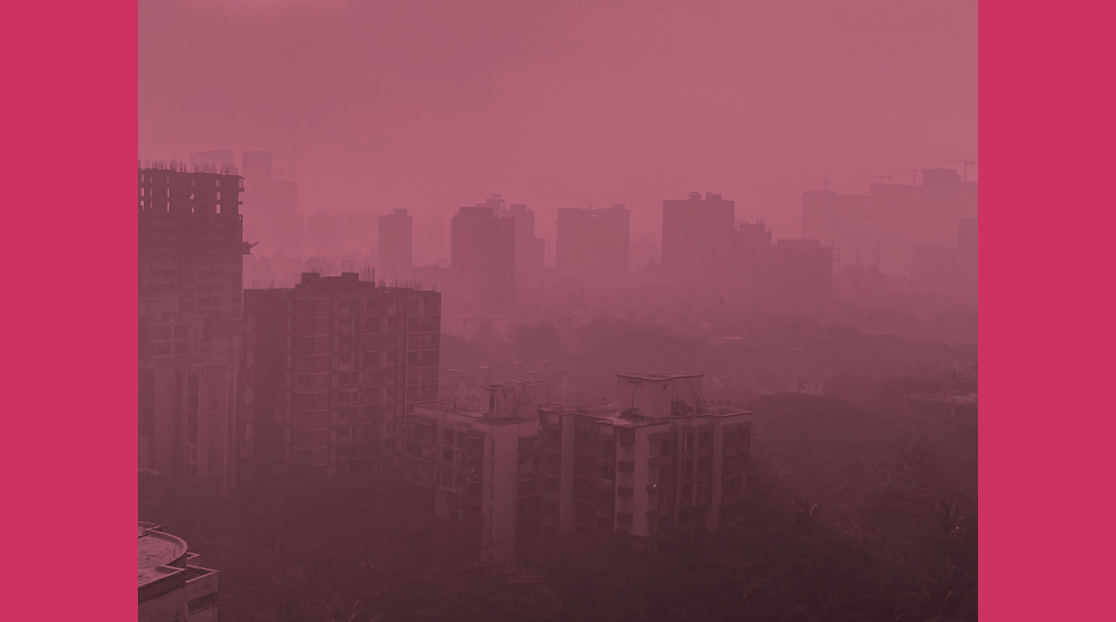
Air Pollution in Mumbai, photo taken by Kartik Chandramouli

Author: Arjun Kamdar

Over the last few weeks the air pollution levels in India have reached extremely hazardous levels. On several days, seventy-four of the hundred most air polluted cities were in India. This is a serious crisis that is impacting everything that breathes, and is rightly being considered a public health emergency. Among the many marketed solutions, one caught my attention and is deeply alarming: wearable air purifiers.

Searching for solutions

Understandably, this crisis has people scrounging for solutions. The idea of a small, high-tech device that one can carry around and promises to purify the air has intuitive appeal. This little device costs about £30, it comes via a glossy website, uses the word ‘scientific’ in copious amounts, and has pastel colour options. All that seems to be missing is a man in a lab coat smilingly recommending this as the ultimate solution. Fundamentally, this sells the idea that air can be privatised – this little rock around one’s neck can create a portable halo and emits negatively-charged anions that ‘attack’ the bad particles to ‘purify’ the air. There is one major problem; it does not work. 

Air as a public bad

For decades, India’s urban elite have shielded themselves from the failures of public systems. Healthcare, education, security, transport – most of these have been informally privatised. Those who can afford it buy their way out of poor public infrastructure.  

Air, however, is different. It is defined as a public good, or in this case, a public bad. This means that it is (1) non-excludable (no one can be prevented from breathing it) and non-rivalrous (one person’s use does not reduce availability for another). The textbook example of a public good is, ironically, a fireworks show: no one can be excluded from enjoying it, and one person’s enjoyment does not diminish the experience for anyone else. The same logic applies to air: we all share the same air, and it is impossible to contain it in one place or prevent someone from breathing it. There are no neat delineations between indoor and outdoor air.

Smog blankets buildings in Gurugram. Photo by Niranjan B.

The pseudoscience of wearable air purifiers

This is why air pollution demands collective action. No technological innovation can bypass this. While using masks or creating ‘clean air bubbles’ by installing indoor filtration systems or based on robust technology like HEPA filters can help to some extent, eventually, one must step outside or open a window. Wearable devices are marketed as the silver-bullet solution, despite there being no real evidence for their efficacy – neither in practice nor for what they market as “Advanced Variable Anion Technology”.

The scientific claims behind many of these products crumble when looked at closely. Companies cite ‘certifications’ and ‘lab tests’ from prestigious institutions like the Indian Institute of Technology (IIT), one of India’s top engineering and science universities, a well-chosen appeal for the target audience of India’s urban elite and upper-middle class. However, the referenced tests have a fundamentally flawed study design, with too few repetitions to carry any scientific weight/value. In some of these tests they burn an incense stick in a sealed chamber suggested to be representative of air pollution outdoors in India, and then measure the reductions in ultrafine particulate matter over time, without any control condition. Such designs fail at both internal validity, i.e., the mechanism of action as well as external validity, since they ignore the complexity of outdoor pollution, which depends on wind, humidity, temperature inversions, particle composition, emission sources, and dozens of other factors. And most importantly, a seemingly endless supply of pollution. These wearable devices may as well be a bunch of flashing lights.

Some of these devices verge on the dystopian. One widely advertised model resembles a potted plant with plastic leaves, claiming that this technology will purify the surrounding air. The irony is stark. Some also offer these devices for corporate gifting. 

Implications of misinformation

If these devices genuinely worked, or even showed promise, they would already be the focus of research and public health practice. Air pollution is not a novel challenge for humanity, and neither is the knowledge of ions. We understand these technologies well, and the reason they have not advanced further is simple:  because science has already shown that this is a dead end.

There are two critical implications of this misinformation. One, it is unethical and exploitative, and two, it can crowd out motivations for the systemic change that is needed to tackle this large challenge.

These devices exploit people’s vulnerabilities – the legitimate fears that people have for themselves and their loved ones is used to turn a quick buck. Selling untested gadgets during a public health crisis is a dangerous manipulation of public fear for personal gain. The burden of proof of the efficacy of these devices lies with manufacturers, it is not the job of citizens or scientists to test and gather evidence that they don’t work. This is understood in section 2(47) and 18-22 of the Consumer Protection Act, 2019 on ‘unfair trade practices’ and the penalties for misleading advertisements.

Customers of these products I spoke with mentioned that while they are sceptical, “it might at least do something, if not as much as these companies promise”. While the sentiment is understandable, this is a very dangerous narrative. A proliferation of this flawed idea that clean air can be acquired through a quick, personal fix, could weaken the pressure on the government to take action and enact the systemic reforms that are needed. This crowding out of motivations is a real threat to movements that require long-term action. Air pollution is a public and collective challenge, impacting everyone from all classes and therefore, could be a catalysing factor for demanding structural changes. The misconception that private, individual-specific solution is a possibility hinders this, leading to a continuation of the status quo.

A member of parliament wore such a device by a company called Atovio a few months ago – this explicit validation by a public figure, even unknowingly, only amplifies misinformation and gives these dishonest claims a misleading legitimacy.

Air pollution shrouds the streets of Mumbai. Photo by Shaunak Modi.

Can air pollution be solved?

It is not an intractable problem; Beijing faced similar challenges in 2013 as did Bogota in 2018. Both cities ramped up their efforts and managed to tackle the seemingly insurmountable challenge of air pollution through the evidence-backed combination of strict emission controls and regulatory enforcement, and transformative shifts in urban mobility and energy use. India can too. 

This potential is evident to India’s citizens; people from all walks of life and classes have mobilised,  organising protests and legal arguments across the country to confront this serious threat.

There is no technology yet that can privatise air. Structural changes in how cities and societies function are the only real solution, and until then air will remain a public bad. Some problems cannot be bought away.


Nessie – can scientific investigation ever deny cryptid?

Author: Maya Lopez (Blog Chief Editor)

Walking up to the shores of Loch Ness, I saw a body of water that quickly turned black just about 5m away from where I stood. This was not surprising given that this Loch is deep: the deepest point being 230m, housing a volume of water across the entire British Isles. However, the exceptionally low visibility of the water is not only due to the depth but also to its high peat content running from the surrounding land. Noticeably, I didn’t (happen to) see any fish, consistent with the current scientific understanding of the Loch’s biodiversity.  Biodiversity is said to be low due to the low plankton counts (probably due to the low visibility interfering with their photosynthesis). But all these things aside, it was clear that Fort Augustus, the small town of 650 residents, was full of visitors today, here to view the Loch, not necessarily for its serenity and the unique geography, but for its pop culture icon. And if they are lucky, to spot the next sighting of the cryptid known across the world: The Loch Ness Monster.

The iconic long-necked Nessie from the ‘30s:

The Loch Ness, believe it or not, only gained such worldwide attention within this century. The first publication that generated a wide audience was the testimonial of a local hotel-owner, the Mackay couple, on April 15, 1933. It described the sighting of a rolling “beast” or whale-like fish.  Soon after, in August, another report was published describing a sighting of a beast by George Spicer while driving by the Loch. This description was more vivid: the monstrous creature, resembling a prehistoric dinosaur, crawled back into the water. While the myth of the monster in the Loch has existed from ancient times (as far back as the 500s, where some versions of the tale include St. Columba combating a monster from this loch), a lot of the oral tradition included a more vague concept of a monster. However, the articles from the ’30s (and the widely popular movie at the time, King Kong (1933), which featured a long-necked dinosaur-like character, “possibly inspiring” these early sightings) started to capture the audience’s imagination on what this monster may look like. However, arguably what semented this monster’s visual is the most well-known photograph of the said cryptid: “the Surgeon’s photograph”. The iconic image that probably most of you imagine (a long neck, shadowy figure in clear waves of water) was published on April 20th, 1934, in a British newspaper as a submission of Robert Kenneth Wilson, a gynaecologist in London. When I popped into a souvenir shop, I found very few items with this re-print. While I got myself a shortbread pack with the closest resembling photo (who could resist!), THE photo was nowhere to be found. Was this just because of a copyright issue? …or is that photo, say, already known, to be NOT an actual Nessie?

Debunking and scientific investigations (?) of Nessie

For some reason, the lack of the iconic photo-merch bugged me more than the Nessie-less views of the Loch. Truth be told, I had zero expectations to see the cryptid itself, but I was hoping to indulge in historical pop-culture references that enchanted the world for nearly a century! Maybe I should have gone straight to the Loch Ness museum, but the drive this north from the hotel left us with limited time. So, I did some extra reading (online) and found out that my suspicion was right: that famous photo was, in fact, (alongside many pieces of evidence) debunked. “The Surgeon’s photograph”, in fact, was not taken by a surgeon at all. Instead, it was created by M. A. Wetherell, who had previously submitted and was denied the evidence of “Nessie’s footprint” by his employer, the Daily Mail. He planned a revenge in which he crafted the cryptid’s head and neck with wood putty and attached it to a toy submarine. This photo was then taken, which later investigation also revealed to have been cropped to manipulate the impression of size. The picture was then handed to his friend doctor, who then later sold the image to the Daily Mail, resulting in the publication. This (Wetherrell’s) Nessie was apparently sunken and is still possibly somewhere deep in the Loch today.

Many other pieces of evidence were also later debunked upon reinvestigation. The Taylor film from 1938 was found to be a floating object instead of an animal in 1961. Similarly, Perter MacNab’s photograph was analyzed either to be a misinterpreation of two consecutive waves forming a hump like shadow, or an intentional hoax. While much of the investigative efforts seem to have been going to primary dissect each and every notable sighting image, footage, etc (and mostly refuting them), there has also been some genuine “scientific exploration” that took place. The first one, being within a year after the notable siting in 1934,  Edward Mountain commissioned the first large-scale search with 20 men. With binoculars and cameras spread across the Loch, the investigation continued for 5 weeks, and yet no conclusive images were taken, with one film (now lost) may have possibly shown what appeared as a grey seal. By the 60s, the Loch Ness Phenomena Investigation Bureau (LNPIB; later shortened to LNIB), a UK-based society, was fully established to investigate the Loch to identify the Loch Ness Monster or determine the causes of its sighting reports. They launched their first expedition with a whopping $20,000 grant from World Book Encyclopedia to fund a 2-year investigation during the days of May to October, resulting in area coverage of about 80% of the loch surface. Despite their search effort consisting of 1000s of members, including self-funded enthusiasts and successive sonar investigations, once again, nothing conclusive turned up. However, the sonar apparently picked up an “unidentified object” moving at 10 knots per hour, too fast for a typical fish. Such “possible leads from scientific investigation” definitely fueled the enthusiasm, but the advanced technology soon stacked more evidence against the existence of a prehistoric cryptid. In 2018, believe it or not, there was a DNA survey to search for any “unusual species” that could be indicative of an undiscovered cryptid. Surprisingly, no large fish or animal (like a seal) DNA was also found, with the biggest fish being mostly of an eel. This suggests two plausible (?) ideas that 1) there’s a mega eel (somehow never caught) or 2) a large amount of eel DNA traces accumulated from many small eels. Nevertheless, the researcher commented that “we can be fairly sure that there is probably not a giant scaly reptile swimming around in Loch Ness”.

Can Nessie invite you… to Biology?

These examples, while perhaps a killjoy for prehistoric cryptid seekers, are still a fascinating and illustrative example of biology and the science of ecosystems. Another of my favorite estimates suggests that for one of the most popular theories of the Loch Ness monster being an (ancient) humongous reptile to be true, at least 25+ individuals are needed to sustain its species. This “scientifically fleshed out” theory poses several problems where 1) it is estimated that the Loch can only sustain about 17-24 tons of fish (due to the low plankton count we talked about!) which would limit any large carnevours animal over 200-300kg to be up to 10 and 2) If it was a raptilian specie, they will need to breath which should result in much more frequent sighting as the cryptid. Overall, it appears that most scientific consensus of our knowledge of reptiles, ancient dinosaur species, and the Loch’s ecosystem conflicts with the presence of such a cryptid. In fact, the more seriously you consider it, the science says “highly unlikely”.

However, highly unlikely (the best denial science can provide against things that…doesn’t exist) according to peer-reviewed, consensus-driven scientific conclusion, does not stop enthusiasts from asking “what if”. Which I suppose is understandable, and ultimately, they have the freedom to think so. Some hobbyist investigator has claimed that he was able to find more plankton than what people typically assume, claiming that this would equate to the possibility of larger life! (But did he account for the waves/wind that could cause uneven distribution of planktons?)  Falsification spirit in itself is perhaps scientific, but ignoring all the other evidence that points against it is not so much. Personally, I find a lot of these science-based theoretical calculations of how many large cryptids we would need to sustain a species, or the possibility of large eels and waves from the unique geography much more fascinating.  However, then I started to wonder: why do we keep searching for THE THING that the evidence continues to be stacked against its existence? Ultimately, perhaps we (or some of us anyway) want to believe. And this want is so large that we are driven to go back to the drawing board again and again. Or perhaps it’s the romanticism of the unknown itself – to find the thing the elite academics have been saying wrong all this time and proving the underdog right. Or maybe it’s goodwill, and we don’t want to believe that people are lying intentionally. …Or maybe… it’s too expensive to let this story be completely banned at this point.

Either way, it is safe to say that there is no scientific consensus backed reasoning to suspect that a large, prehistoric-looking creature is in Loch Ness. However, I also started to come to terms with the fact that a lot of us are just enjoying the story of it all, and perhaps even the back-and-forth effort of proving and disproving.  Ultimately, this cryptid is arguably loved and needed by the town. Science, unfortunately, is often an expensive affair (especially the more resource-intensive conclusive approach like emptying out the Loch, for example), and a strong public interest is always a key to funding. If I were tasked to investigate when there is no scientific “reason to suspect” it exists, I personally can’t justify myself for putting my money and labor into it. However, while this might be wishful thinking, such tales can be leveraged to spark a more general scientific intrigue, perhaps enticing the cryptid hunters into other biodiversity citizen science projects even before they know it!  Furthermore, science doesn’t always have to be the killjoy denying fun, by encouraging people to challenge the convention (especially if it’s getting outdated). In that spirit, perhaps the High-Tech 2023 90th Anniversary Search is justified (albeit with willing participants). I think I’ll wait to pull out my bionoculars until National Geographic approves a photograph of Nessie (with a bounty of a million pounds) and entrusts the enthusiast to keep a watch for us.  Ultimately, while unintuitive for non-cryptid believers like me, Nessie investigations might just prove itself valuable as a great science public-engagement opportunity to fascinate a wider audience with the latest science investigation methods (often otherwise too technical and niche). Who knows, the kid walking out of the souvenir shop with the Nessie plushy might just gain enough intrigue in investigating the Loch under the lenses, and one day be the next scientist to find a much cooler Nessie in the water of Loch Ness under the microscope 🙂

CUSAP After Hours: Debate with compassion while sharping your philosophical razors

Author: Maya Lopez (Blog Chief Editor)

Following our first event in 2024 which was more of a lecture format, we then had a workshop on debating – but with a dash of compassion – to see if we can really change minds. This was organized by our two co-chairs of CUSAP, where we discussed the theories and practical tips on addressing conversations with misinformed individuals and some role-playing in a relaxed at-home evening at Queen’s. Here are some of the takeaway messages I got from the session, a few tricks that everyone can have under their sleeve to be a better communicator, and a handful of “philosophical razors” to further sharpen critical thinking.

So why should I even “debate”?:

A long long time ago in my previous life as a teenager, I used to attend academic debate events. I often hear people say you’ll learn to love the things you’re good at. But for me, receiving awards in debates was never really enjoyable. Academic debates (especially those meant to discuss truly debatable topics) are inherently about the art of debate and presentation. Hence typical signs of toxic online debaters could apply here too: it could resemble a play of words, a heated battle going back and forth, and tactfully trying to point out the opponent’s logical flaws (ie, being a nitpicking jerk aiming for the GOTCHA moment). Somehow the better I scored, the more I felt like a… horrible person.

And really, anyone doing this even in the calmest manner in everyday life is far from likable and most likely won’t convince others with different opinions. (Case and point, Socrates might have many philosophy and logical frameworks credited to him, but arguably what sent him to his death row is his bona fide troll-ness…). Furthermore, in academic debate, there is more or less a referee to fact-check – but who is there to do that in real-time in everyday conversations?

This is why I personally shied away from debates as I hit college – it was mentally draining and felt even like pulling the worst out of me. But naturally, there are times in life when you will encounter those with different opinions – hopefully just a “debatable” opinion – but what if some of such “opinions” are harmful? or dangerous? or demeaning? It may be more immoral to NOT debate – or really to show and persuade other ways of thinking. So this CUSAP event was also my personal journey to re-study debate in a different light – as a way to empathize and suggest different ways to look at things with compassion.

So then, what’s the trick?

We covered many theories during the session but here are a few highlights:

  • Golden minute → A technique commonly practiced by clinicians where they give about a minute at the beginning of patient examination to just let the patient describe all of their symptoms. Being attentive during this minute through other active listening techniques without interrupting can not only make your patient feel heard but also give a great opportunity to let their emotion and perceptions be shared. Similarly in the context of misinformation debate, the person who you are talking to might very well be in some sort of unease or (emotional) pain. So give them time to let it out. …and academic debate-wise, this is quite tactful because you let the opponent reveal their cards first… But all jokes aside, listening is a genuinely underestimated aspect of a conversation because it’s easy for us to carry in our bias too. We might assume where their misinformations are coming from and attribute that to certain personality characteristics. So let them speak before we make unfair assumptions.
  • Good faith principle → Speaking of unfair assumptions, this next technique literally is just that. It is apparently even a way of thinking by law, and as a word suggests, one should not assume that the misinformation/conspiracy theory is coming from a bad intent. Of course, the boundaries of mis and disinformation can be murky, but in most daily contexts, what are the odds of encountering individuals who profit off of spreading post-truth? Rather than an evil mastermind, it’s more likely that we are just talking to someone who’s genuinely confused, agitated, concerned, or scared.
  • New information over denial of info → Bombarding with denial (ie screaming telling YOU’RE WRONG), is quite ineffective at altering beliefs. Studies suggest a difficulty in people simply changing beliefs when they are presented with opposing facts because cognitively these two juxtaposing facts will need to compete over the position of the belief. So rather than confronting the misinformation head-on, we could just present new information that will make the listener think (or better yet question) the premises of their conclusion. 

Let’s say a person takes an anti-COVID vaccine stance which they say is because they can’t trust evil pharma and this is just a scam to make a profit. Sure, big pharma is a company too which is profit driven. But, I read that AZ didn’t make a profit with the Covid-19 vaccines. Also, there are worldwide equitable programs like COVAX, no? …Hopefully partially agreeing, but also showing new facts regarding their premise of all big pharma projects = bad will get them to explore views instead of if we were to just opposing their conclusion that COVID vaccine = bad. Of course, this is not bulletproof, and this can lead us to….

  • Steel-man tactic → The person you were talking to doubled down and argued that vaccines bad because big pharma bad. Okay, then you know what, let’s explore that together. You may know this tactic’s evil twin brother called straw-man which just dodges the bullet, but in this case, you purposely bolster their argument and then explore what their strongest version of the argument will look like. An interesting post here details the process we can put into practice, but essentially this will allow the two parties in conversation to be together on the same page to explore nuances. Who knows, maybe you’ll end up agreeing with the big-pharma-bad part and the difficulties in capitalism in general, at which point is this at all about vaccines? and off we go to the anti-capitalism march! Or maybe there will be some nuances: well not all projects are bad I guess, especially if particular projects are non-profit. Either way, exploring further into the why behind the misinformed conclusion, can lead to constructive exploration, leading ultimately to an undated conclusion.

Of course, there were a lot more tips that we covered in the workshop, but I personally think it boils down to our intent. Think about why we want to persuade them. Most likely, we care about them to some degree. Then show that. TELL THEM THAT. In fact, I’d argue that if your intent to “debate” is just to show off your “smartness” (not even for the knowledge’s sake but especially to “put them down”) perhaps you should not be engaging this in the first place. Perhaps, we need to first ask ourselves about the good faith principle – and if we fail this litmus test, we may do more harm than good.

Some final thoughts and sharpening your critical thinking with philosophical razors

Overall, this was a very uniquely CUSAP workshop – not just because of the theme around pseudoscience, but because it reflects our will to improve as a empathic communicator. It is perhaps far too common amongst academic circles to be lost in the pleasure of the logical precision and vast amount of facts we can present about a topic during a debate. This may be an excellent tactic in academic debates, but our intellect should also realize that to change the hearts of others, we can’t just end in such “self-indulgence”. While I say this, it’s not an easy feat (I’m most definitely a beginner in the techniques mentioned above). Besides, we are people too, and when topics are touchy as pseudoscience, it is fair to acknowledge that it might hurt our feelings just a bit too – being denied of our daily efforts in pursuit of science -.

Furthermore, just because you are a student of STEM doesn’t automatically immunize us to pseudoscience too. Even before debating others in an attempt to persuade, our own logic and perception should be also challenged (albeit, as a CUSAP member I do recommend standing firmly on the ground that we are convinced to be scientific, and acknowledge that not absolutely everything is a matter of perspective). In an attempt to persuade, is our explanation getting overly convoluted? Shave it down with your trusty Occam’s razor! Did we poorly phrase how we think things “ought” to happen, by making a sudden leap from what IS taking place based on our preconceived notions and expectations? Even if this is from good intentions, philosophically these two notions should be separated with Hume’s guillotine!

At this rate, it feels like swiss-army-full of these philosophical razors will sharpen your critical thinking to make a perfect debate case, but don’t get yourself too carried away. In the context of pseudoscience, it’s tempting to pull out Alder’s razor, which claims that if something cannot be experimentally tested or through observations, then it is not worthy of debate. Especially in many pseudoscience topics, this might be the kneejerk reaction you will gravitate to (you know that it is a waste of time to even contemplate Earth is flat!). But this razor has its cavitate where this philosophy itself is not “scientifically validatable” and at which points it puts the whole premise under a strain. This is where we might have to dial down on this whole dismissive attitude toward all “unprovable” theories (and hence how our science is right), but rather focus on the theories that can be proven wrong using Popper’s razor (also known as the Popper’s falsifiability principle). While this will allow us to present the best scientific theory that is not currently falsified, should we be debating “theories” so fundamentally fantastical with equal priority as those at least partially based on scientific reality? We can use Sagan’s razor (aka Sagan’s standard) to cut down such extraordinary claims that are not supported with extraordinary evidence, to ultimately pick our games.

There are still more of these philosophical razors, but at the end of the day whether these concepts help us with critical thinking or the debate tactics we learned in the session are all something that can’t be done easily without practice. Sometimes the conversation will get emotional, and sometimes the conversation happens at the wrong moment when things are very personal. While practicing these skills on the go out in public, therefore, might seem scary, I think CUSAP has cultivated a safe space for all of us – united with the goal of betterment – to explore and discuss our ideas. Putting this knowledge to the test and practicing our “art of compassionate debate”. 

If this kind of science philosophy is your spiel or you just want to boost your science communication skills (and trust me, we hold a lot of casual, at-home vibe sessions!), consider joining us at the CUSAP mailing list or Instagram. Come say hi at one of the upcoming events if you can make it 🙂

Sources and Recommended Reading:

  • Most sources are hyperlinked in the text but here are some few key picks:

CUSAP After Hours: Pseudoscience – the Science through the Looking Glass

Author: Maya Lopez (Blog Chief Editor)

One way to describe pseudoscience is perhaps a distorted science.  In some way or another, they present features that feel scientific, even to an exaggerated level.  However, as the mirror separates the un-melding reality and its reflection, such distinction can be made between science and its reflection – pseudoscience.  Today we will explore such philosophical grounds to prevent pseudoscience from infiltrating reality in this post-truth day and age. To this end, we will look into the original philosophical definitions and key takeaways I got from a special lecture – our first official event of this academic year – by Prof. Hasok Chang. He has also been supporting us as Senior Treasurer from the inception of our society.  The lecture posed a deceivingly simple but surprising philosophical question: What is Pseudoscience? And the clue to this question lies about 100 years ago, on May 29, 1919. 

Arthur Eddington, the director of Cambridge Observatory led an expedition to observe the solar eclipse to test the theory of relativity. Eddington and Dyson positioned themselves at Principe Island, while another expedition team with Crommelin and Davidson was in Brazil. Together they were challenging Einstein’s Theory of Relativity.  If it was correct and the light is indeed bent by gravity, stars in the Taurus constellation would be visible during the eclipse, positioned differently compared to the calculations by Newtonian physics. Together, they made the observation that marks history: stars aligned with Einstein’s theory.

However, this was not the only history that was being made on this day. This story influenced a young 17-year-old in Vienna, and to quote himself “(it) had a lasting influence on my intellectual development.” Karl Propper would eventually become the philosopher who explored the philosophical distinction between knowledge based on science and what he coined as pseudoscience.

But first, what is science?

To unravel the question of pseudoscience, we first had to test our own perception of science itself. This may seem straightforward, based on what we learned about the scientific method in middle school.  But what is science, really? More specifically in Popper’s words:

When should a theory be ranked as scientific?”

Surprisingly, this was a question that modern philosophers had never fully characterized up until Popper. While characterizing vast and wide “science” itself may be difficult, we can find the constituents of things we deem scientific.

So let’s lay some on the table. Many aspects of what we often perceive as scientific might be a little something like: quantitative, explanatory, and empirical. However, all these aspects are in fact well conserved in other domains that we also could define as – in Popper’s terms – pseudoscience (or at least non-hard/natural science). For example, consider the “social science” domain like Economics. Modern Economics also uses models that can be expressed in equations, presenting itself as more heavily mathematical than perhaps some of the medical sciences. Now let’s consider the next aspect on the list: explanatory. Conspiracy theories are no match in terms of explaining things – the icebergs can get so deep and it’s bulletproofed against all counterarguments, because see?  Interpret it this way and it’s just another proof that absolutely everything ties back to the Deep State! But then, at least hard science is the most empirical approach to knowledge… right?

Objective and empirical data gathered from replicable experiments… but words like “objective” and “replicable” are not as clear-cut as one may hope. After all, to those who believe in pseudoscientific theories such as Flat Earthers, their experiences are indeed genuine replicable “experiments” that can be tallied and quantified objectively. So, these typical “qualities of science” like empirical-ness are unfortunately a matter of perspective and not a uniquely defining factor. To further complicate the matter, such a struggle for replicability is also in the world of actual sciences. Major natural science publications have been noting the “replicability crisis” for years, and it is important to acknowledge that even with a genuine intention of scientific experiment, small differences in interpretation and methods can pave the way to this replicability crisis.

…So by now, if you are feeling more confused about what science than before we started, fret not because this is very confusing. According to Prof. Chang, many undergrads facing this question in the HPS course will very often fall into the same pitfalls of presumed scientific qualities as those listed earlier. When pseudoscience at its core seems to mirror – and sometimes “outperforms” in – so many key qualities of science, and when in fact some cases of “pseudoscientific” theories turned out to be the basis of the next science and vice versa, you can’t help but wonder:  Is there no way to identify science from the pseudoscience?  While it is indeed not a clear-cut line to separate the two, luckily there is a philosophical distinction to be made.  

Falsifiability and Popper’s observation on “predicting” the present vs. predicting the future

Back to Popper in Vienna, the early 1900s was an unprecedented epoch in the field of knowledge. A new realm of physics was being proposed by Einstein. Historical Materialism was proposed by Karl Marx as a new view on history, and the relationship of observed human behavior as a phenomenon is now seemingly explainable by Sigmund Freud’s Psycho-analysis. At the time, these frontiers of knowledge were arguably treated with equal weight as new theories that pushed the boundaries of the scientific mainstream. However, Popper concluded that not all “scientific achievement” was made equally depending on whether the method of obtaining the knowledge was to confirm an existing belief OR to actively attempt to disprove the unreality of the null hypotheses.

Let’s unpack that concept following the footsteps of Popper himself. Popper used to take the lectures by Einstein and was studying the psychoanalytic of Freud. One day, he asked Alfred Adler himself (an ex-colleague of Freud who eventually formed his own theory of individual psychology) about a case report that was seemingly not… Adlerian. Yet when asked, Adler easily explained the case using his theory, leaving no discrepancy. Given that Adler has never analyzed the individual of the case, Popper asked why he could be so sure to which Adler replied that his thousands of former experiences support this theory.

And this, was ultimately what distinguished Einstein’s theory to be the only truly scientific theory amongst the list earlier. Adlerian theory in this case was used to “predict” why the behavior had/has been taking place and it is so hard to “disprove” a retrospective interpretation.  Similar criticism can also be applied to (in?)famous Freudian psychology.  While still regarded as the foundations of modern psychology, it hasn’t aged too well when it comes to how “scientific” his theories are where every feminine intimacy issue is seemingly rooted in male genitalia envy and daddy issues.  They explain why certain psychological phenomena happened so well by encapsulating them into logically constructed theoretical frameworks (although even then, it did cause disagreements, leading colleagues like Adler and Jung to depart).  While such Freudian theories gave us the satisfaction of feeling like we understand why things are – this is still a retrospective explanation of a past – an explanation behind the known result. They didn’t, however, do as well when it comes to predicting unseen future behaviors – which often scientific hypothesis aims to do. This importance of how you verify scientific claims is perhaps akin to association and causation in modern medical science.  Even if substance X is correlated with say cancer, you can only scientifically show that it causes cancer if you set up an experiment where you put that substance – in say mice or cell culture – to test your prediction on “unseen future” by seeing if it does form cancer or not. While you could always reinterpret past events (or interpret dreams in Freud’s case) to support your theory, if the cancer didn’t form or the stars didn’t align in 1919, the scientific theory is simply not working.

Furthermore, Popper brings in a new approach to this philosophical limitation of verificationism – falsificationism. In brief, Popper’s realization of the distinctively “scientific” approach to a theory by Einstein, led to philosophical conclusions that focus on how science actively disproves future possibilities to approach truth while pseudoscience (as in nature of the knowledge rather than modern conspiratory connotation per se) focuses on proving and explaining past phenomena.  Following is the excerpt of his writing from 1962 outlining this concept in detail: 

  1. It is easy to obtain confirmations, or verifications, for nearly every theory—if we look for confirmations.
  2. Confirmations should count only if they are the result of risky predictions; that is to say, if, unenlightened by the theory in question, we should have expected an event which was incompatible with the theory—an event which would have refuted the theory.
  3. Every ‘good’ scientific theory is a prohibition: it forbids certain things to happen. The more a theory forbids, the better it is
  4. A theory which is not refutable by any conceivable event is nonscientific. Irrefutability is not a virtue of a theory (as people often think) but a vice.
  5. Every genuine test of a theory is an attempt to falsify it, or to refute it. Testability is falsifiability; but there are degrees of testabilty: some theories are more testable, more exposed to refutation, than others; they take, as it were, greater risks.
  6. Confirming evidence should not count except when it is the result of a genuine test of the theory; and this means that it can be presented as a serious but unsuccessful attempt to falsify the theory. …
  7. Some genuinely testable theories, when found to be false, are still upheld by their admirers—for example by introducing ad hoc some auxiliary assumption, or by re-interpreting the theory ad hoc in such a way that it escapes refutation. Such a procedure is always possible, but it rescues the theory from refutation only at the price of destroying, or at least lowering, its scientific status. (I later [after 1920 –NS] described such a rescuing operation as a ‘conventionalist twist’ or a ‘conventionalist stratagem’.) 

This was a revolutionary approach to thinking: only by interrogating your hypothesis by exploring other opposing possibilities, you can be confident about your theory. Furthermore, this lends to the idea that one day, when we do get an observation that contradicts our model, our standing theory will be then proven wrong.  However, Popper believed that every falsified theory is “good” because we were able to rule out a possibility, putting us closer to the truth. This is perhaps the beauty and the complexity of the scientific method: it’s a long, iterative process of elimination, but we get closer to understanding the world, one step at a time.

Being comfortable with uncertainty

While now we have some philosophical grounds to determine which knowledge is more scientific than the other, this inevitably opened up another eerie reality: uncertainty. Scientifically, you can be confident that something is most likely a correct representation of the truth – but this is far from the solid explanatory fact -THE truth! – we all crave. After all, being confident about a theory still leaves room for the probability of exceptions. Science is inherently uncertain.

Nevertheless, the volatility of “truth”, is arguably the very appeal for aspiring scientists. You are off to an adventure of the unknown and you are using any tools to best encapsulate the mysterious nature lying in front of you. While this is a romanticized view from a reader of science myself, I can easily imagine that from anyone outside of the adventure crew, we can appear as a bumbling mess at times or worse, untrustworthy contradictorians and a hypocrite.

Many of the modern scientific achievements progressed through the process of falsification. This ultimately lends itself to denying at least part of the former discoveries, and thus individual reports across a timeline may appear contradictory. Even if this is inevitable and the reality is often more nuanced than the black-and-white “contradiction”, we must admit: flip-flopping on conclusion appears unprincipled and possibly dangerous for fields that directly affect life like medicine. Imagine if you asked a friend for advice.  This person says one thing but then next month, does a complete 180 and even stack up evidence on why you were not supposed to do that. The explanation is certainly factual and logical, but the emotional appeal on whether you can trust this guy is put on a pedestal because it ultimately makes YOU responsible – requiring you to put in the work with a thinking cap.

In some circumstances, this might feel liberating. You are in charge of your thoughts based on a knowledgeable friend with references to back up different claims.  But if you’re in your lows, or if you are in a desperate situation? This is too much – you might even find this friend irresponsible because you wanted advice to follow. In such a scenario, another friend – a more charismatic, authoritative figure who TELLS you specifically how to think with absolute certainty, and taking that red pill is all of a sudden more appealing.

So… is science doomed to lose the trust over pseudoscience?

Through the lecture, we explored further case studies of pseudoscience, attempts to change people’s minds, and personal experiences shared by Prof. Chang.  But for today, I would like to round up with one of our key ongoing questions as CUSAP: What can science as a community do to be more trusted?

There is unfortunately no simple or singular answer (and yes, this is a cheat code academics use to jade the rest of the society, sorry). However, I think scientists themselves have a lot more we can do to change how society perceives science. I will even call it mandatory for scientists to care about this question and public communication of our work. Combatting the distrust should be the paramount importance to our profession, because we didn’t go through the painstaking process of all these degrees to be demarked as fraudsters, right? Are we not searching for truth to better understand the world? To better the world as we know it?

Partly, I declare this because I understand that it is not easy. Despite how Hollywood may portray “academic figures” like Nazi-fighting Indiana or tech-superman epitomized by Iron Man, science IS NOT THAT GLAMOROUS! Spending 4-6 hours (or more….) tending your cells (or counting god forbid), running around the field, and weekend lab time to feed your cultures – you may be surprised at how much “tedious” stuff takes place under the hood. Of course, for some, every moment of this work might be a pure joy – because they LOVE what they do -. But for many, like all jobs, there can be bits that we don’t particularly love.

But then what keeps us driving is the sheer belief that this search into reality will mean something. For medical researchers, this may be for our health. And how ironic is it if we are stuck in our ivory tower preaching our findings to better the society and no one trust what we say? Maybe it’s time to say goodbye to the genius scientist archetype or the heroic tech-bro myths, take off this facade of “logical (and thereby superior), non-emotional intellectuals”, and embrace our emotional drive. Because we care about facts AND emotion, for we love and care about the world of wonders – including everyone that inhabits it 🙂

If this kind of science philosophy is your spiel or you just want to learn some new cool misconceptions surrounding science (and trust me, just being a STEMM student does not make you immune to this!), consider joining us at the CUSAP mailing list or Instagram. Come say hi at one of the upcoming events if you can make it.

A Word from Luis, Our Founder

I wonder if anyone else can relate to how I misspent my youth, endlessly arguing in YouTube comments, on Facebook posts and even with friends and family, trying, probably obnoxiously, to advocate science and rationality. Looking back, some interactions definitely make me cringe. I do not think I brought anyone who believed in the “flat earth” around to my way of thinking, nor did I have any success in proving that vaccines work. In fact, despite its patent absurdity, I was probably unable to stop people from consuming perhaps the worst alternative “medicine” of all time: industrial bleach.

At the time, I genuinely believed that simply providing scientific evidence and explanations would change minds, despite the generous lacings of naïve and cocky condescension I included in every comment. I now realise just how patronising my approach was: I was implying that people were uninformed and insulting their intelligence. While it is certainly true that some people who hold these pseudoscientific beliefs know little about science, many highly intelligent, well-educated, and otherwise wonderful people will tell you, with a straight face, that the moon landing did not happen, Bush did 9/11 and that global warming is a deep-state hoax to destroy the middle class. These people have often spent countless hours researching the subject and there is often some, albeit incorrect, interesting and persuasive logic to their points. Many have prepared arguments to rebut each of your simpler points and, in subjects that I am not well-versed in, I have been taken to the limits of my understanding by flawed, but well-reasoned arguments. These intelligent, dynamic and determined people often form the core of content creators which keep a pseudoscientific ideology alive. They produce the viral response videos which keep people believing, their passion and strength of belief draws in undecided viewers and their charisma keeps people sharing and clicking. It is, then, not as simple as fifteen-year-old me once thought to pry people away from the seductive intrigue of being “in-the-know”, being part of one of these pseudoscience communities, being a member of this new internet cognoscenti.

Cambridge University Students Against Pseudoscience, or ‘CUSAP’, is a new society which aims to take a better-informed approach to combatting pseudoscience. The society arose when a group of friends were discussing the noticeable and sudden uptick in dangerous misinformation and pseudoscience being disseminated online during the COVID crisis. We were looking for a student society to join which aimed to tackle this specific problem in an effective manner. We found many wonderful ‘skeptic’ and ‘rational’ societies, but none which focused specifically on arming students to combat this new digital threat. CUSAP was founded to address this gap and to try and learn and educate about how to approach this extremely difficult issue. We have hosted wonderful speakers in our short existence to date and learned much about the psychology and epidemiology of misinformation, conspiracies and anti-scientific thought. We hope to create a society which doesn’t take a rude or haughty position towards those we hope to persuade, whilst still maintaining a robust, persuasive and uncompromising defence of scientific and logical principles.

I would like to welcome anyone who is interested to attend our events, whether or not you agree with us, and I invite anyone to join us in our campaign to help push back against pseudoscience. There’s plenty of content to come and lots fun to be had along the way!

Luis Fernandes | Founding President, Students Against Pseudoscience