Pseudoscience in the Climate Conversation – what should you be reading?

Author: Anna Maria Schuller, CUSAP Secretary

Walking into a bookstore anywhere in the world today, you can orient yourself fairly quickly. Bright colours and romantic illustrations point you towards the #booktok section, self-help books yell at you with their large titles on minimalist backgrounds, and tastefully bound hard-copies of classical literature are assembled along old-timey styled shelves. In recent years, a new section of books kept in greens, blues, and earth tones with globes and nature-focused illustrations on the covers has appeared: the climate science books – helping the everyman make sense of the climate crisis.

This past term (Lent ‘26), CUSAP had the great pleasure of hosting Dr. Kennedy Mbeva and Prof. Mike Hulme, who highlighted to us some of the less widely discussed aspects of the climate conversation. We’ve collated some of their recommendations for you, so you know what to look out for the next time you find yourself in a bookstore.

Mike Hulme – “Understanding Climate Science – Consensus and Misinformation”

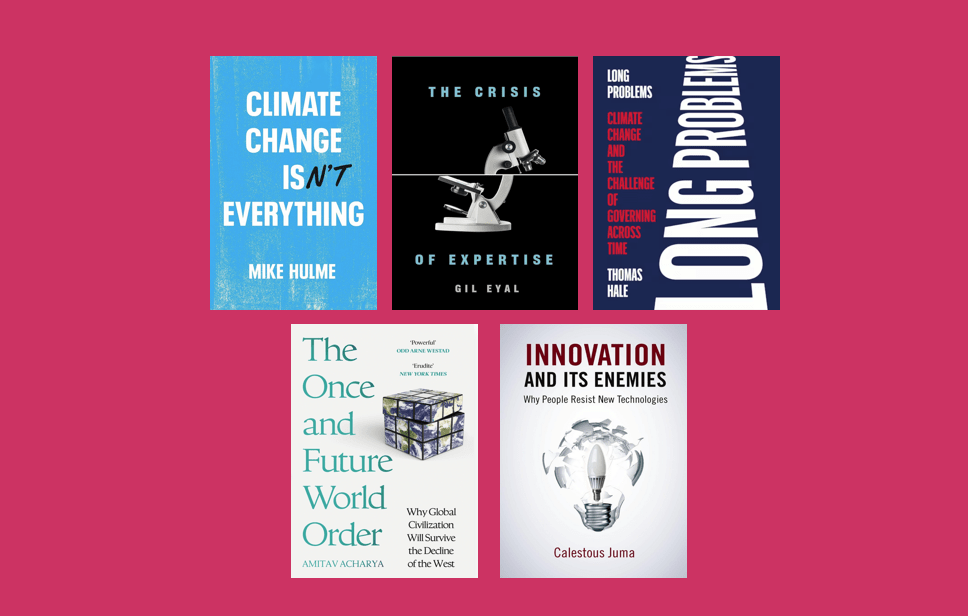
Climate Change isn’t Everything: Liberating Climate Politics from Alarmism – Mike Hulme

Starting off with one of his own works, this book is an excellent read especially for our members who weren’t able to attend Professor Hulme’s talk in person. With this book, he achieves two things; he manages to refine the climate conversation, focussing on evidence-based discussion that allows us to isolate manageable climate-related issues to solve. At the same time, he moves the conversation forward by pushing past alarmism. Importantly, rather than its title might suggest, this book is far from falling into climate change denial, and offers a very solution-oriented perspective that will appeal to anyone worried for our planet.

In continuation of an essay written by Professor Eric Winsberg (British Academy Global Professor of History and Philosophy of Science at the University of Cambridge), and as an expansion of this book, Professor Hulme has also authored a great blog post titled “We Need Scientific Dissidents Now More Than Ever”, which you can find here. He warns us of the scientific equivalent of Plato’s “Noble Lie”, and the threat of undermining climate research by withholding / misrepresenting existing findings. This short post is an excellent introduction to the concepts explored in the book, but as a five minute read will remain with its readers as food for thought for a long time.

Mike Hulme is a Professor of Human Geography at the Department of Geography of the University of Cambridge

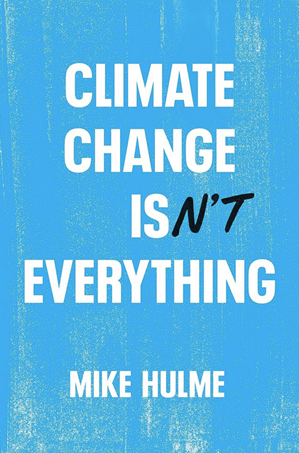
The Crisis of Expertise – Gil Eyal

Although not specific to climate change by any means, this nonetheless highly relevant exploration of the role of experts in modern decision making will be fascinating to researchers across all fields engaged in the public discourse. It explores the dissonance between a global reliance on “experts”, for example those with a deep understanding of climate change mitigation technology and the simultaneous mistrust they often face. Furthermore, it challenges the growing politicization of science, and elaborates on its threats, forming an interesting read especially in combination with Mike Hulme’s book.

Gil Eyal is a Professor of Sociology at Columbia University, and the recipient of a Guggenheim Fellowship (2017)

Kennedy Mbeva – “On intergenerational solidarity in climate cooperation.”

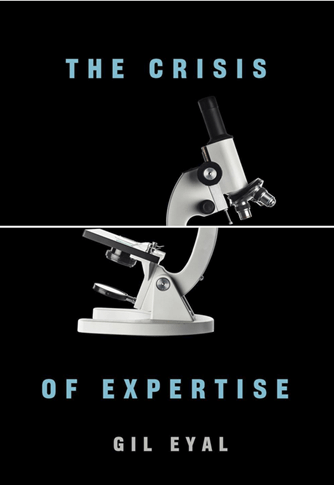
Long Problems: Climate Change and the Challenge of Governing Across Time – Thomas Hale

The newest edition to Thomas Hale’s canon of works is a great entry point to understanding a new way of thinking about the climate crisis; It tackles questions of responsibility and prioritization in the present, when consequences are not felt directly and must be anticipated over decades and centuries. At a time when young people are taking to the streets to demand that governments act with their future needs in mind, and those responsible for the advent of climate change long gone, how will we need to make decisions moving forward?

Thomas Hale is a Professor of Global Public Policy at the Blavatnik School of Government (University of Oxford), and a fellow at St. Antony’s College

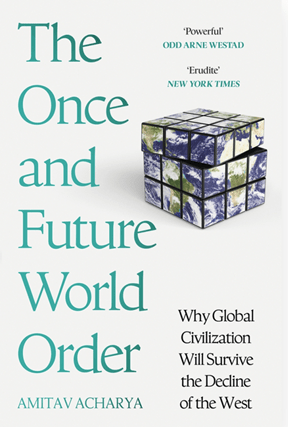
The Once and Future World Order: Why Global Civilization Will Survive the Decline of the West – Amitav Acharya

Not specifically focused on climate science but nonetheless highly relevant, Amitav Acharya walks us through a history of the world order, and explains why domination by the West is neither inevitable nor likely in a future marked by uncertainty. In doing so, he unpacks misconceptions about geopolitical dynamics and shifting power structures. For Dr. Mbeva, this raises an important question: When the world order shifts, who will be there to combat the climate crisis?

Amitav Acharya is a Professor of International Relations at American University in Washington D.C., as well as holding the UNESCO Chair in Transnational Challenges and Governance

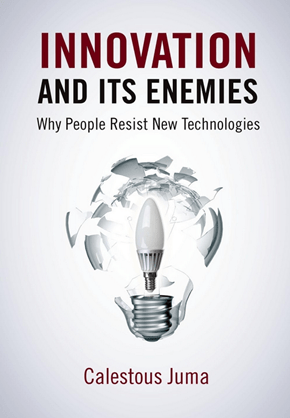
Innovation and its Enemies: Why people resist new technologies – Calestous Juma

Far ahead of its time in 2016, Calestous Juma lays out the moral, socioeconomic, psychological, and historical factors that prevent the adaptation of new technologies into the mainstream. When read through a climate lens, Dr. Mbeva finds that Prof. Juma can help us understand the inertia inherent to political decisions to support technical solutions to climate change and global warming.

Calestous Juma was a Professor of the Practice of International Development and Faculty Chair of the Innovation for Economic Development Executive Program at the John F. Kennedy School of Government, Harvard University

We are beyond grateful to both Professor Hulme and Dr. Mbeva for sharing their points of view with us, and hope that you, our readers, will carry these conversations forward!

Can we buy clean air?

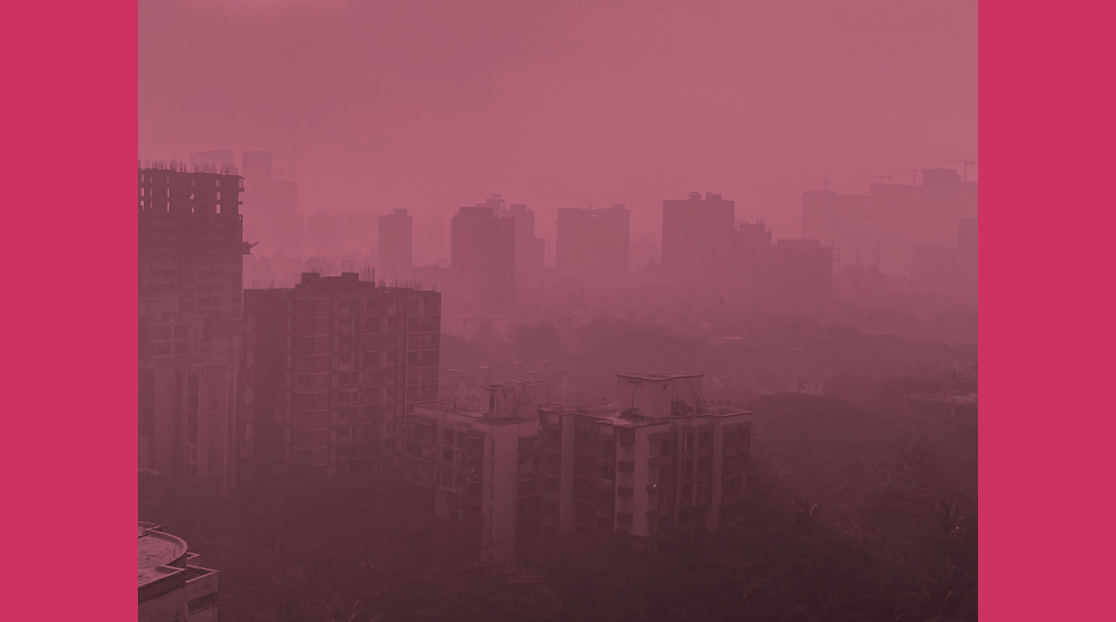
Air Pollution in Mumbai, photo taken by Kartik Chandramouli

Author: Arjun Kamdar

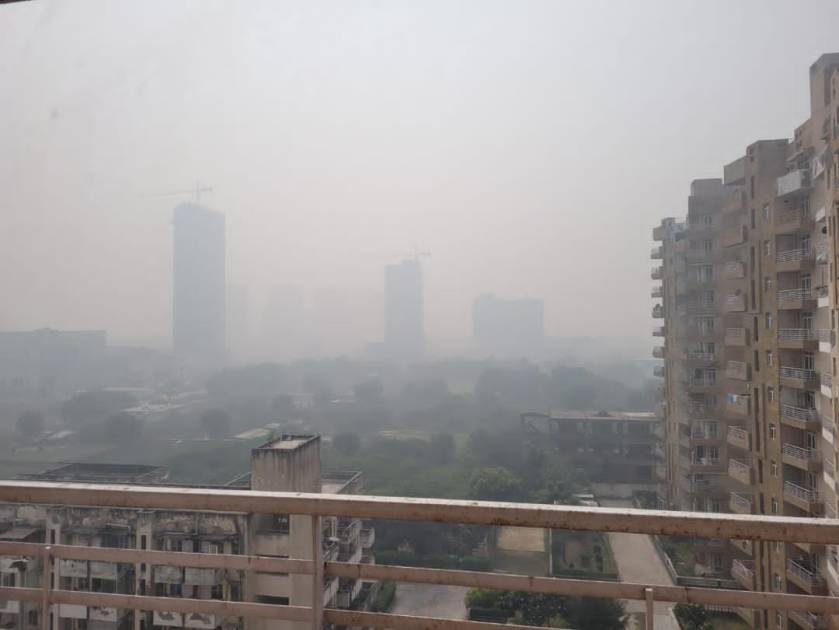
Over the last few weeks the air pollution levels in India have reached extremely hazardous levels. On several days, seventy-four of the hundred most air polluted cities were in India. This is a serious crisis that is impacting everything that breathes, and is rightly being considered a public health emergency. Among the many marketed solutions, one caught my attention and is deeply alarming: wearable air purifiers.

Searching for solutions

Understandably, this crisis has people scrounging for solutions. The idea of a small, high-tech device that one can carry around and promises to purify the air has intuitive appeal. This little device costs about £30, it comes via a glossy website, uses the word ‘scientific’ in copious amounts, and has pastel colour options. All that seems to be missing is a man in a lab coat smilingly recommending this as the ultimate solution. Fundamentally, this sells the idea that air can be privatised – this little rock around one’s neck can create a portable halo and emits negatively-charged anions that ‘attack’ the bad particles to ‘purify’ the air. There is one major problem; it does not work. 

Air as a public bad

For decades, India’s urban elite have shielded themselves from the failures of public systems. Healthcare, education, security, transport – most of these have been informally privatised. Those who can afford it buy their way out of poor public infrastructure.  

Air, however, is different. It is defined as a public good, or in this case, a public bad. This means that it is (1) non-excludable (no one can be prevented from breathing it) and non-rivalrous (one person’s use does not reduce availability for another). The textbook example of a public good is, ironically, a fireworks show: no one can be excluded from enjoying it, and one person’s enjoyment does not diminish the experience for anyone else. The same logic applies to air: we all share the same air, and it is impossible to contain it in one place or prevent someone from breathing it. There are no neat delineations between indoor and outdoor air.

Smog blankets buildings in Gurugram. Photo by Niranjan B.

The pseudoscience of wearable air purifiers

This is why air pollution demands collective action. No technological innovation can bypass this. While using masks or creating ‘clean air bubbles’ by installing indoor filtration systems or based on robust technology like HEPA filters can help to some extent, eventually, one must step outside or open a window. Wearable devices are marketed as the silver-bullet solution, despite there being no real evidence for their efficacy – neither in practice nor for what they market as “Advanced Variable Anion Technology”.

The scientific claims behind many of these products crumble when looked at closely. Companies cite ‘certifications’ and ‘lab tests’ from prestigious institutions like the Indian Institute of Technology (IIT), one of India’s top engineering and science universities, a well-chosen appeal for the target audience of India’s urban elite and upper-middle class. However, the referenced tests have a fundamentally flawed study design, with too few repetitions to carry any scientific weight/value. In some of these tests they burn an incense stick in a sealed chamber suggested to be representative of air pollution outdoors in India, and then measure the reductions in ultrafine particulate matter over time, without any control condition. Such designs fail at both internal validity, i.e., the mechanism of action as well as external validity, since they ignore the complexity of outdoor pollution, which depends on wind, humidity, temperature inversions, particle composition, emission sources, and dozens of other factors. And most importantly, a seemingly endless supply of pollution. These wearable devices may as well be a bunch of flashing lights.

Some of these devices verge on the dystopian. One widely advertised model resembles a potted plant with plastic leaves, claiming that this technology will purify the surrounding air. The irony is stark. Some also offer these devices for corporate gifting. 

Implications of misinformation

If these devices genuinely worked, or even showed promise, they would already be the focus of research and public health practice. Air pollution is not a novel challenge for humanity, and neither is the knowledge of ions. We understand these technologies well, and the reason they have not advanced further is simple:  because science has already shown that this is a dead end.

There are two critical implications of this misinformation. One, it is unethical and exploitative, and two, it can crowd out motivations for the systemic change that is needed to tackle this large challenge.

These devices exploit people’s vulnerabilities – the legitimate fears that people have for themselves and their loved ones is used to turn a quick buck. Selling untested gadgets during a public health crisis is a dangerous manipulation of public fear for personal gain. The burden of proof of the efficacy of these devices lies with manufacturers, it is not the job of citizens or scientists to test and gather evidence that they don’t work. This is understood in section 2(47) and 18-22 of the Consumer Protection Act, 2019 on ‘unfair trade practices’ and the penalties for misleading advertisements.

Customers of these products I spoke with mentioned that while they are sceptical, “it might at least do something, if not as much as these companies promise”. While the sentiment is understandable, this is a very dangerous narrative. A proliferation of this flawed idea that clean air can be acquired through a quick, personal fix, could weaken the pressure on the government to take action and enact the systemic reforms that are needed. This crowding out of motivations is a real threat to movements that require long-term action. Air pollution is a public and collective challenge, impacting everyone from all classes and therefore, could be a catalysing factor for demanding structural changes. The misconception that private, individual-specific solution is a possibility hinders this, leading to a continuation of the status quo.

A member of parliament wore such a device by a company called Atovio a few months ago – this explicit validation by a public figure, even unknowingly, only amplifies misinformation and gives these dishonest claims a misleading legitimacy.

Air pollution shrouds the streets of Mumbai. Photo by Shaunak Modi.

Can air pollution be solved?

It is not an intractable problem; Beijing faced similar challenges in 2013 as did Bogota in 2018. Both cities ramped up their efforts and managed to tackle the seemingly insurmountable challenge of air pollution through the evidence-backed combination of strict emission controls and regulatory enforcement, and transformative shifts in urban mobility and energy use. India can too. 

This potential is evident to India’s citizens; people from all walks of life and classes have mobilised,  organising protests and legal arguments across the country to confront this serious threat.

There is no technology yet that can privatise air. Structural changes in how cities and societies function are the only real solution, and until then air will remain a public bad. Some problems cannot be bought away.