Author: Anna Maria Schuller, CUSAP Secretary
Walking into a bookstore anywhere in the world today, you can orient yourself fairly quickly. Bright colours and romantic illustrations point you towards the #booktok section, self-help books yell at you with their large titles on minimalist backgrounds, and tastefully bound hard-copies of classical literature are assembled along old-timey styled shelves. In recent years, a new section of books kept in greens, blues, and earth tones with globes and nature-focused illustrations on the covers has appeared: the climate science books – helping the everyman make sense of the climate crisis.
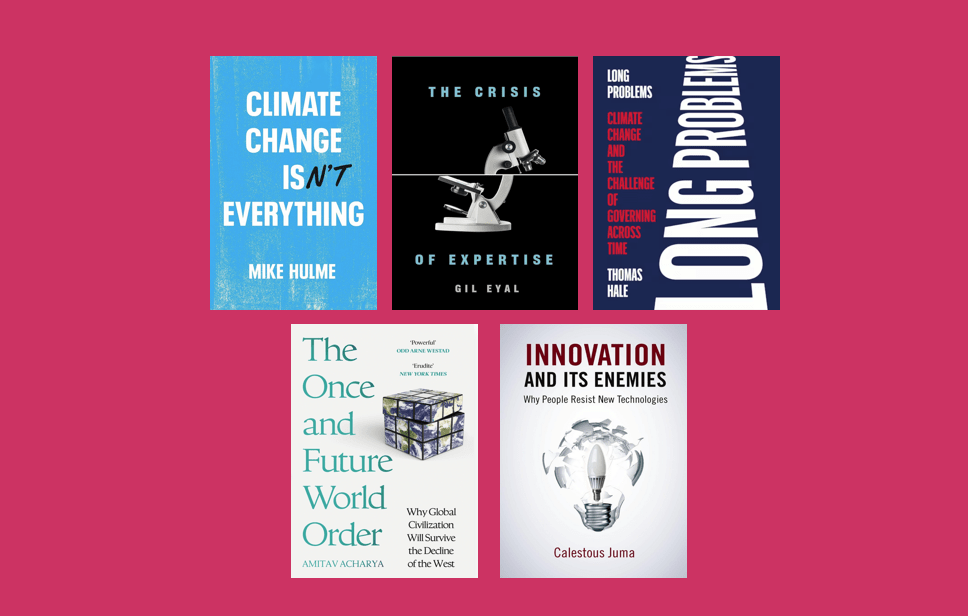
This past term (Lent ‘26), CUSAP had the great pleasure of hosting Dr. Kennedy Mbeva and Prof. Mike Hulme, who highlighted to us some of the less widely discussed aspects of the climate conversation. We’ve collated some of their recommendations for you, so you know what to look out for the next time you find yourself in a bookstore.
Mike Hulme – “Understanding Climate Science – Consensus and Misinformation”
Climate Change isn’t Everything: Liberating Climate Politics from Alarmism – Mike Hulme
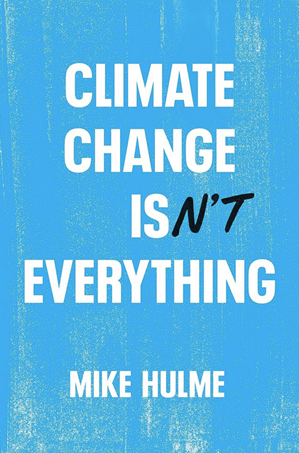
Starting off with one of his own works, this book is an excellent read especially for our members who weren’t able to attend Professor Hulme’s talk in person. With this book, he achieves two things; he manages to refine the climate conversation, focussing on evidence-based discussion that allows us to isolate manageable climate-related issues to solve. At the same time, he moves the conversation forward by pushing past alarmism. Importantly, rather than its title might suggest, this book is far from falling into climate change denial, and offers a very solution-oriented perspective that will appeal to anyone worried for our planet.
In continuation of an essay written by Professor Eric Winsberg (British Academy Global Professor of History and Philosophy of Science at the University of Cambridge), and as an expansion of this book, Professor Hulme has also authored a great blog post titled “We Need Scientific Dissidents Now More Than Ever”, which you can find here. He warns us of the scientific equivalent of Plato’s “Noble Lie”, and the threat of undermining climate research by withholding / misrepresenting existing findings. This short post is an excellent introduction to the concepts explored in the book, but as a five minute read will remain with its readers as food for thought for a long time.
Mike Hulme is a Professor of Human Geography at the Department of Geography of the University of Cambridge
The Crisis of Expertise – Gil Eyal
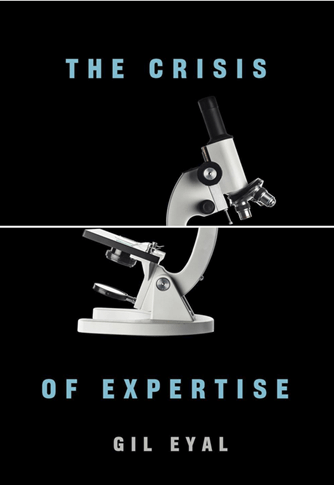
Although not specific to climate change by any means, this nonetheless highly relevant exploration of the role of experts in modern decision making will be fascinating to researchers across all fields engaged in the public discourse. It explores the dissonance between a global reliance on “experts”, for example those with a deep understanding of climate change mitigation technology and the simultaneous mistrust they often face. Furthermore, it challenges the growing politicization of science, and elaborates on its threats, forming an interesting read especially in combination with Mike Hulme’s book.
Gil Eyal is a Professor of Sociology at Columbia University, and the recipient of a Guggenheim Fellowship (2017)
Kennedy Mbeva – “On intergenerational solidarity in climate cooperation.”
Long Problems: Climate Change and the Challenge of Governing Across Time – Thomas Hale
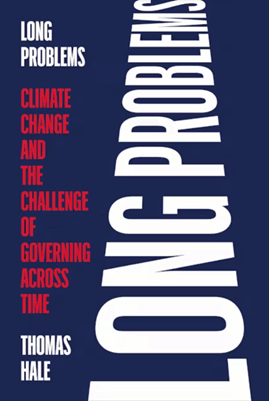
The newest edition to Thomas Hale’s canon of works is a great entry point to understanding a new way of thinking about the climate crisis; It tackles questions of responsibility and prioritization in the present, when consequences are not felt directly and must be anticipated over decades and centuries. At a time when young people are taking to the streets to demand that governments act with their future needs in mind, and those responsible for the advent of climate change long gone, how will we need to make decisions moving forward?
Thomas Hale is a Professor of Global Public Policy at the Blavatnik School of Government (University of Oxford), and a fellow at St. Antony’s College
The Once and Future World Order: Why Global Civilization Will Survive the Decline of the West – Amitav Acharya
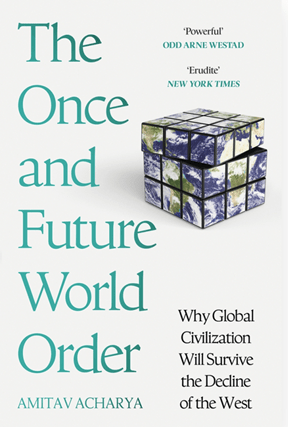
Not specifically focused on climate science but nonetheless highly relevant, Amitav Acharya walks us through a history of the world order, and explains why domination by the West is neither inevitable nor likely in a future marked by uncertainty. In doing so, he unpacks misconceptions about geopolitical dynamics and shifting power structures. For Dr. Mbeva, this raises an important question: When the world order shifts, who will be there to combat the climate crisis?
Amitav Acharya is a Professor of International Relations at American University in Washington D.C., as well as holding the UNESCO Chair in Transnational Challenges and Governance
Innovation and its Enemies: Why people resist new technologies – Calestous Juma
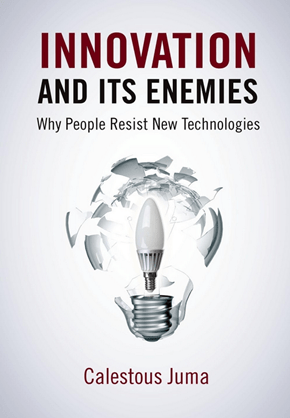
Far ahead of its time in 2016, Calestous Juma lays out the moral, socioeconomic, psychological, and historical factors that prevent the adaptation of new technologies into the mainstream. When read through a climate lens, Dr. Mbeva finds that Prof. Juma can help us understand the inertia inherent to political decisions to support technical solutions to climate change and global warming.
Calestous Juma was a Professor of the Practice of International Development and Faculty Chair of the Innovation for Economic Development Executive Program at the John F. Kennedy School of Government, Harvard University
We are beyond grateful to both Professor Hulme and Dr. Mbeva for sharing their points of view with us, and hope that you, our readers, will carry these conversations forward!

